


Many folks try to open a dialogue about important things with questions that can be answered with just a single word. That’s poor design. In the case of financial advisors and insurance agents specifically, client discovery conversations need to be open-ended. The more you can get clients to share with you about their full financial picture, the easier it is to identify and troubleshoot for them.
Think about it. “Have you thought about life insurance?” Is easy to deflect and easy to forget by the next meeting. A “no,” terminates the talk. And what does “yes,” even do for you? The better way in doesn’t mention insurance at all. It’s about change.
Try this, instead: “What changed in your life or your finances this year?” A new baby. A promotion. A liquidity event. Every one of these answers can peel the lid off a broader life insurance conversation, and none of them include a hard-driving sales pitch. The question is open-ended, consultative, and personal.
Why this can work better
Advisors avoid life insurance conversations for good reasons. The products may be unfamiliar, the questions may seem overly personal, and nobody wants to seem uninformed in front of a client with whom they’ve spent years earning trust. So the conversation is dropped, or it veers directly into term life because term is simple to explain and easy to understand, even when it’s not the right fit.
Providing clients a better holistic planning experience isn’t about improving the insurance pitch. It’s about providing better context. Life insurance planning isn’t a single product decision. There’s no “set it and forget it” here. Life insurance strategies change as a client’s life changes. The right question meets the client where they are, not where a simple checklist assumes they should be.
That’s the whole idea behind our “Wheel of Life” framework, and it’s why we built an ebook around it.
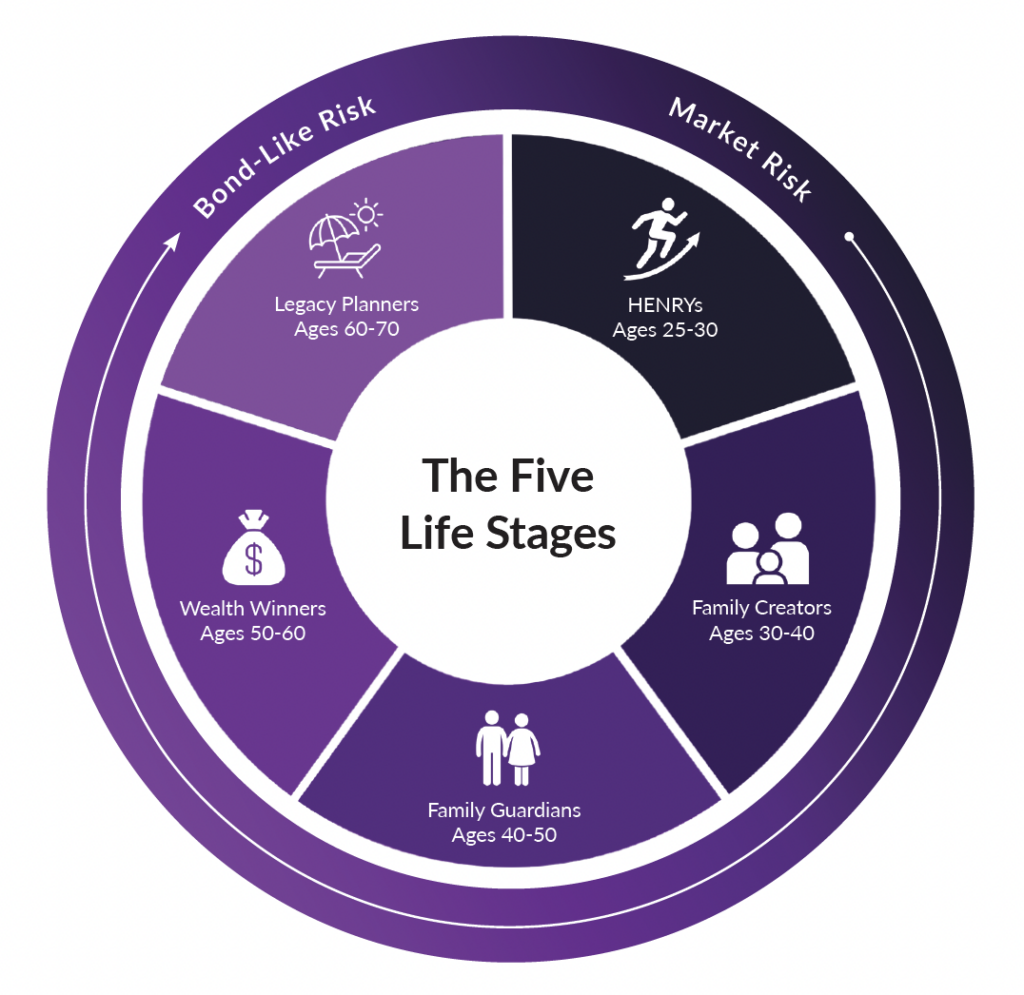
Five stages, five different conversations
The “Wheel of Life” breaks a client’s financial life into five stages, each with its own risks, its own needs, and its own opportunity for a life insurance conversation:
HENRYs
(high earners, not rich yet, ages 25 to 30) are building wealth fast but have no strategy for what happens when life gets more complicated. The conversation here is about locking in insurability early, while it’s cheap and simple.
Family Creators
(ages 30 to 40) are stacking financial decisions faster than they can evaluate them. They don’t need permanence yet. They need flexibility they can grow into.
Family Guardians
(ages 40 to 50) are in peak earning years with an empty nest on the horizon. The conversation shifts from protection to tax-efficient growth and early legacy planning.
Wealth Winners
(ages 50 to 60) have just had a liquidity event, an inheritance, or a business sale, and their old policy no longer fits their new balance sheet. This is a repositioning conversation, not a first-time-buyer conversation.
Legacy Planners
(ages 60 to 70) are asking a completely different question: not “am I protected” but “what do I leave behind, and to whom.”
The same client relationship, over time, can open up five entirely different conversations, depending on where they sit on the wheel.
My Hot Take
Maybe the biggest risk to a client isn’t being underinsured. Maybe It’s being insured for the person they used to be. A policy written for a 28-year-old HENRY doesn’t serve a 45-year-old Family Guardian. A Whole Life policy purchased before a liquidity event doesn’t serve a Wealth Winner with ten times the balance sheet. Advisors who treat life insurance as a one-time transaction are leaving both protection and revenue on the table, year after year, without realizing it.
The advisors who get this right aren’t the ones with the best pitch. They’re the ones asking the right question at the right stage, then having the tools and support to act on the answer.
Where to start
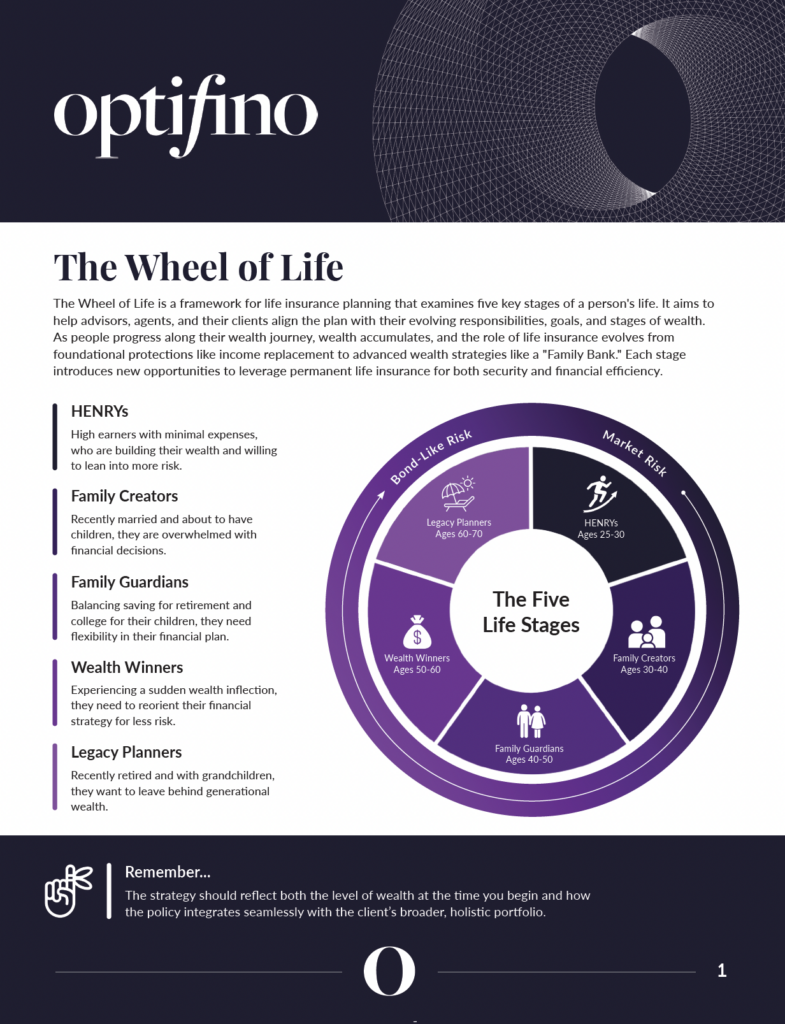
For a simple framework you can bring into your next client meeting instead of a cold sales pitch, download our “Wheel of Life” ebook. It walks through all five stages with sample client personas, the specific products that fit each strategy, and the numbers that explain why the strategy changes as wealth changes. You’ll walk out with a conversation starter that doesn’t sound like a sales pitch, because it isn’t one. It’s a way to ask your client what actually changed this year, and to have a real answer ready when they tell you.
Download the “Wheel of Life” ebook →